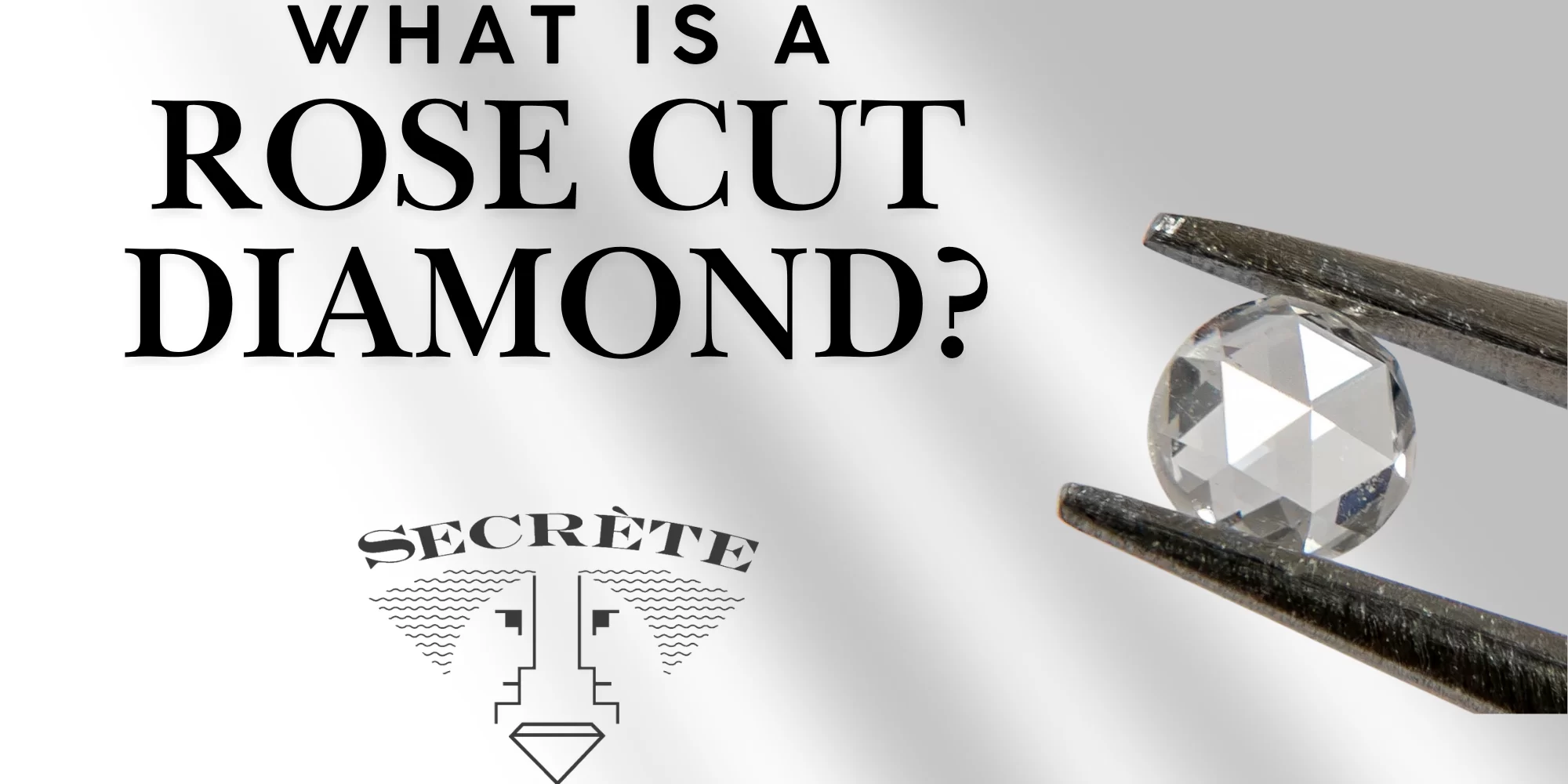
A Rose Cut diamond is an old diamond cut that has attracted renewed interest among people looking for engagement rings with more character than a conventional modern brilliant. Its flat bottom, domed top, and triangular facets create a softer visual effect than the concentrated sparkle associated with many contemporary diamond cuts. Instead of emphasizing maximum brilliance, a rose cut emphasizes shape, surface, and a gentle play of light. That combination gives the stone a distinctly antique appearance while still allowing it to feel fresh in custom jewelry.
Rose Cut Diamond History
The Rose Cut diamond originated in the 16th century with the defining structure and visual qualities that still distinguish the cut today. According to GIA, “The rose cut is a lovely vintage diamond shape that dates back to the 16th century. Unlike modern brilliant cuts, rose cuts have a flat bottom and a domed top covered in triangular facets—usually 12 or 24—arranged to resemble the petals of a rosebud.
This unique faceting gives rose-cut diamonds a soft, subtle sparkle and antique beauty. “ Because those characteristics remain part of the cut, a newly set rose cut can still carry the visual language of antique jewelry. Its history is therefore visible in the stone itself, not only in the setting that surrounds it.
Visual Differences Between Rose Cut and Brilliant or Step Cut Diamonds
The construction of a Rose Cut diamond creates a noticeably different appearance from both brilliant and step cut diamonds. A modern brilliant cut has a deeper profile that produces a more concentrated pattern of reflected light, while a step cut uses long facets to create a more geometric effect. By contrast, a rose cut places triangular facets across a domed surface above a flat bottom. As a result, the eye tends to notice the outline and individual facets of the diamond rather than a deep pattern of light within the stone. That distinction gives rose cuts their softer, more visibly antique character.

Brilliance
A Rose Cut diamond produces a softer kind of brilliance than a modern brilliant cut, and that difference is central to its appeal. Brilliant cuts create intense sparkle, while rose cuts produce broader, quieter flashes across their triangular facets. The effect can look more like light moving over the surface than the rapid scintillation associated with a round brilliant. For that reason, a rose cut should be chosen for its subtle shimmer rather than judged by how closely it resembles a modern brilliant.
Clarity

Clarity can also appear more prominent in a Rose Cut diamond because its shallow structure leaves the interior relatively open to view. Without the same depth and concentrated reflective pattern found in a brilliant cut, internal characteristics may be easier to notice through the broad facets. Step cuts can also emphasize clarity, although their linear facets create a more structured appearance. In a rose cut, clarity becomes part of the individual character of the stone, especially when paired with its visible faceting and antique style.
The exceptional ability to see through rose cut diamonds make them great for the extremes: if you want a very very eye-clean diamond (VS1 or better), a rose cut will show off its perfection. If you love the galaxy look of a salt and pepper diamond, on the other hand, a rose cut diamond showcases all the spots and specks that salt and pepper fans adore. Finally, black diamonds are usually cut as rose cut, no matter what their shape is, because they absorb light instead of refracting it, so it wouldn’t make sense to cut them as a brilliant cut.


Rose Cut Diamonds vs. Old Mine Cut Diamonds
Rose Cut diamonds and old mine cut diamonds both have strong associations with antique jewelry, but their structures create very different results. A rose cut is shallow and usually flat-bottomed, so most of its visual presence is concentrated across the face of the stone. An old mine cut has more depth, which gives it a different profile and a stronger sense of dimension beneath the girdle. Consequently, a rose cut emphasizes surface and outline, while an old mine cut presents a fuller traditional diamond shape. Both can suit vintage-inspired jewelry, but they create distinct types of antique character.
Many times, in jewelry, you’ll see an old mine cut diamond in the center surrounded by rose cut diamonds as halo stones or accent stones. Other times, small rose cut diamonds are used interchangably with single cut diamonds (another older round cut of diamond with 17 facets instead of the 57 used for modern round brilliants) as side stones. The mix of multiple cut styles on one piece of jewelry is very antique and gives visual interest.

Other Similar Cuts: Portrait Cut, Old European, and Briolette
Several other unusual diamond cuts may appeal to someone considering a Rose Cut diamond, although each has its own structure and visual effect.
- Portrait cut diamonds: A portrait cut is flatter and more transparent in appearance, while an Old European cut has more depth and brilliance.
- Briolette diamonds: A briolette is cut to be a dangle for pieces like diamond drop earrings or necklaces. Briolettes are faceted with triangles or checkerboards all around, so they have a similar appearance to a rose cut, but they’re a usually a teardrop or 3D pear shape.
- Checkerboard cut: Checkerboard cuts are usually gemstones, not diamonds, but the cut resembles a rose cut in that there’s a domed top with geometric facets. The checkerboard cut, however, has square or kite-shaped facets whereas the rose cut has triangles.
These cuts may share an antique or unconventional quality, but the Rose Cut diamond remains distinctive for its combination of shallow proportions, triangular facets, and soft sparkle.
Rose Cut Diamond Shapes: Not Just Rounds
The Rose Cut diamond is a cutting style rather than a single outline, so it can appear in many shapes beyond a traditional round. Rose cuts can be oval, pear, marquise, cushion, geometric, or irregular while retaining the flat bottom and domed faceting that identify the style. A rounded shape can emphasize the romantic quality of the cut, while an elongated or geometric outline can make it feel more contemporary. This variety is particularly useful in custom jewelry because the design can respond to the exact proportions and personality of an individual stone rather than treating every rose cut as interchangeable.

Rose Cut Diamonds in Engagement Rings
Rose Cut diamonds work especially well in engagement rings because they can serve as either unconventional center stones or vintage-style accents. A rose cut solitaire puts the diamond’s outline and faceting at the center of the design, while rose-cut side stones can add antique character around another diamond or colored gemstone.

According to Vogue Australia, Twee Queen Lily Collins wears a rose cut diamond solitaire engagement ring, showing how the cut can create an elegant but slightly whimsical look.

Jennifer Aniston’s 2012 engagement ring from Justin Theroux offered a more dramatic interpretation with an approximately 8 to 9 carat rose-cut cushion diamond set in 18K gold. Together, the two rings show how a Rose Cut diamond can appear delicate, quirky, romantic, or regal depending on the stone and setting.
Lab Grown Rose Cut Diamonds
Secrète Fine Jewelry specializes in sourcing the “hard to find” stones that can make a custom ring feel truly distinctive, including antique-cut lab grown diamonds. These can include lab grown Rose Cut diamonds, lab created old mine cut diamonds, step-cut marquise diamonds, and Old European cut lab grown diamonds. Because Secrète works directly with labs and diamond cutters, the process can go beyond simply searching available inventory. We can work with our partners to create your ideal diamond from scratch, including the cut, proportions, shape, and antique-inspired character you are looking for. This makes lab grown diamonds especially exciting for clients who love historic cuts but want greater flexibility when creating a highly specific custom design.
Secrète also regularly recreates antique-inspired rings from photographs of vintage pieces, including designs that use ethical materials throughout the entire ring. That attention to detail can extend all the way down to the smallest accent stones, including custom lab grown Rose Cut side stones when the original design calls for them. Rather than approximating the overall look with readily available modern cuts, we can recreate the distinctive shapes, proportions, and details that give an antique piece its character. Whether you are inspired by a family heirloom, a vintage ring you found in a photograph, or a historic design you want interpreted in a new way, custom-cut lab grown diamonds make it possible to preserve those antique details while creating a completely new piece.
Custom Rose Cut Diamond Rings at Secrète Fine Jewelry
A Rose Cut diamond is particularly well suited to custom design because the proportions and character of the individual stone can guide the ring around it. Rather than fitting an unusual diamond into a standardized setting, a custom design can respond to its exact outline, faceting, and visual weight. A rose cut can become a quirky center stone, a romantic vintage-inspired solitaire, or a distinctive side stone paired with another diamond or gemstone. At Secrète Fine Jewelry, that flexibility allows the design to emphasize the qualities that attracted the client to the stone in the first place. For someone looking beyond a conventional brilliant-cut engagement ring, a Rose Cut diamond offers a historic style that can still feel highly personal.