A beautiful engagement ring doesn’t have to come with an extravagant price tag, and, contrary to popular beliefs, choosing to do custom design doesn’t necessarily mean spending more. In fact, designing your own ring can give you greater control over your budget than buying a premade piece. By choosing the gemstones, precious metals, and design details yourself, you can decide where to spend and where to save. At Secrète Fine Jewelry, we work with couples to create affordable custom engagement rings that suit their personal style without exceeding their budget.
How Much Does a Custom Engagement Ring Cost?

The price of a custom engagement ring depends on the materials, gemstones, and craftsmanship involved, but custom design offers plenty of opportunities to manage those costs. A ring featuring a large natural diamond and intricate hand crafted details will generally cost more than one with a smaller diamond and less elaborate metalwork. However, the custom design process allows you to choose which features deserve more of your budget rather than paying for a premade ring with elements you might not have selected yourself. For example, you might prefer to invest in an exceptional center stone while keeping the setting relatively simple. Alternatively, you could select a more affordable gemstone and devote more of your budget to an elaborate vintage-inspired design. Both approaches allow you to create a ring that reflects your taste while keeping the overall price within your comfort zone.
Custom design can also help you avoid unnecessary expenses by allowing you to make decisions about every part of your ring. Rather than falling in love with a finished piece that’s beyond your budget, you can work with a jeweler to identify the details you love and explore different ways to achieve a similar appearance. Adjusting the size of accent stones, modifying decorative metalwork, or selecting a different gemstone can all influence the final price. For a closer look at the costs involved, read our article, Custom Made Engagement Rings: Is Custom Design More Expensive Than Buying Premade?
Choose an Affordable Center Stone
The center stone is often the most expensive part of an engagement ring, making it one of the best places to start when planning your budget. While natural diamonds remain a popular choice, they are far from the only option for custom made engagement rings. Lab-grown diamonds offer the traditional appearance of a diamond at a substantially lower price, while moissanite provides exceptional sparkle and excellent durability. Sapphires, meanwhile, give couples the opportunity to incorporate color and create something less traditional. Each gemstone has its own characteristics, advantages, and price considerations, so it’s worth comparing them before committing to a design. Choosing a more affordable center stone can also free up room in your budget for other details, such as accent diamonds, hand engraving, or a more elaborate setting.
Lab-Grown Diamond Engagement Rings

Lab-grown diamonds have become an increasingly popular option for couples who want a traditional diamond engagement ring without the cost of a comparable natural diamond. They are real diamonds, with the same chemical composition, hardness, and optical properties as their natural counterparts. The difference is how they’re formed. Instead of developing underground over millions of years, lab-grown diamonds are produced using technology that recreates the conditions necessary for diamond formation. To the naked eye, a well-cut lab-grown diamond looks just like a natural diamond, making it an appealing choice for anyone who loves the classic appearance of a diamond engagement ring.
The biggest advantage of lab-grown diamonds is their price. Because they generally cost far less than natural diamonds of similar quality, you may be able to afford a larger stone or a more unusual cut without stretching your budget. This is particularly helpful if you’re interested in antique-inspired diamond shapes or want a substantial center stone surrounded by smaller accent diamonds. Lab-grown diamonds also appeal to couples looking for alternatives to mined gemstones, although their environmental impact depends on the energy and production methods used. At Secrète Fine Jewelry, we can help you compare natural and lab-grown diamonds to determine which makes the most sense for your design and budget.
Custom Moissanite Engagement Rings

Moissanite is another beautiful alternative for couples who want plenty of sparkle without paying diamond prices. Although it resembles a diamond, moissanite has its own distinctive appearance, producing colorful flashes of light that are especially noticeable in bright conditions. It is also exceptionally hard and resistant to scratching, making it a practical choice for jewelry that will be worn every day. Most moissanite used in fine jewelry is lab-created, offering a non-mined option for couples who prefer to avoid traditionally sourced gemstones.
One of the biggest benefits of moissanite is the freedom it gives you when designing a custom ring. A large moissanite center stone can cost considerably less than a natural diamond of similar dimensions, allowing you to experiment with different shapes, proportions, and settings. Whether you prefer an elongated oval, an antique-inspired cushion cut, or a classic round stone, moissanite offers plenty of possibilities. You can also use the savings to incorporate additional design elements, such as diamond accents or decorative metalwork. Our Custom Moissanite Engagement Rings: A Design Guide explores the gemstone in greater detail and offers inspiration for creating your own ring.
Custom Sapphire or Gemstone Engagement Rings

Sapphires are worth considering if you love colored gemstones or want an engagement ring that looks different from a traditional diamond design. Although blue sapphires are the best known, these gemstones also occur in pink, peach, yellow, green, and many other colors. Their exceptional hardness makes them suitable for everyday wear, and their wide range of colors offers opportunities to create rings that feel especially personal. A sapphire can also bring a vintage-inspired design to life, particularly when paired with smaller diamonds or decorative gold settings.
The price of a sapphire varies considerably depending on its color, size, quality, and whether it’s natural or lab-created. While fine natural sapphires can be extremely expensive, other stones may offer more affordable options, particularly when you’re flexible about color or size. Lab-created sapphires provide another way to reduce costs while enjoying the appearance and durability of this gemstone. Working directly with a jeweler allows you to compare different stones and consider how their colors and proportions will look in your finished design.
Other gemstones are also possible for engagement rings. Many different stones are strong enough and beautiful enough to be good candidates for an engagement ring, however certain stones may perform best with specific setting styles (or lifestyles) in mind. A knowledgeable jeweler can help you find a gemstone for your engagement ring that will bring a smile to your face for years to come.

Save Money on a Natural Diamond Without Sacrificing Beauty

If your heart is set on a natural diamond, understanding the four Cs can help you avoid spending extra money on characteristics that aren’t particularly noticeable without magnification. Cut, color, clarity, and carat weight all influence the price of a diamond, but that doesn’t mean you need the highest grade in every category. In many cases, a carefully selected diamond with slightly lower color or clarity grades can look just as beautiful as a more expensive stone. The key is understanding which differences you can actually see and which ones matter primarily on a grading report.
The Gemological Institute of America (GIA) emphasizes the importance of cut quality, explaining, “If a diamond is well cut, many compromises in clarity, color and even carat weight can be forgiven.” Cut influences how effectively a diamond reflects light, making it an important consideration when comparing stones. A beautifully cut diamond may appear brighter and more attractive than a larger stone with less impressive proportions, so choosing based on carat weight alone isn’t always the best use of your budget.
Clarity offers another opportunity to save money without noticeably affecting the appearance of your engagement ring. Diamonds with very high clarity grades command premium prices, even though many inclusions are invisible to the naked eye. As GIA explains:
“In almost all cases, the clarity features in VVS and VS diamonds and above cannot be seen with the unaided eye. Most SI diamonds will also not have any eye-visible inclusions. This means that an SI2 diamond can look the same as a more expensive, higher-clarity diamond, each of the other 4Cs being equal.”
Carat weight can also make a surprising difference in price, particularly around popular milestones such as one, two, and three carats. A diamond weighing 0.90 carats, for example, may cost less than a one-carat diamond while appearing nearly identical in size. Comparing different weights, proportions, and clarity grades with your jeweler can help you find a beautiful natural diamond without paying extra for differences you may never notice.
Customize Your Engagement Ring to Fit Your Style and Budget
The setting is another important consideration when budgeting for a custom engagement ring because the cost of the metalwork depends on how the ring is constructed and decorated. Intricate hand engraving, delicate filigree, additional gemstones, and complicated designs can all add to the price. However, you don’t necessarily need to eliminate these details to make a design more affordable. A jeweler can help you decide which features are most important and suggest adjustments that preserve the appearance you want. For example, a vintage-inspired ring might incorporate milgrain borders and a few carefully placed accent stones rather than extensive hand engraving or elaborate decorative metalwork.
It’s also important to understand that the number of gemstones doesn’t necessarily determine how expensive or complicated a ring will be. A solitaire engagement ring simply features one gemstone, but its setting can range from a traditional four-prong mounting to an elaborate handmade design with intricate metalwork. Likewise, a three-stone ring with relatively simple settings may require less decorative work than an ornate solitaire. The best approach is to consider the entire design, including the proportions, craftsmanship, and decorative details, rather than assuming one style will automatically cost less than another.
Your choice of precious metal can affect both the price and appearance of the finished ring. Yellow, white, and rose gold each offer different looks, while platinum has its own advantages in terms of durability and wear. The amount of metal required, the width of the band, and the complexity of the setting also influence costs. Rather than choosing a metal based on price alone, discuss how it will perform over time and whether it suits your preferred design. For more ideas, explore our Top Tips for Customizing Your Own Engagement Ring, which covers gemstone selection, setting styles, and other decisions involved in creating a custom ring.
Plan Ahead for Your Custom Engagement Ring

There’s an old paradigm that says you can only pick two of the following: good, fast, and cheap. With engagement rings, that’s definitely true. You can have a good custom engagement ring, and you don’t have to pay an arm and a leg for it, but you can’t get it overnight!
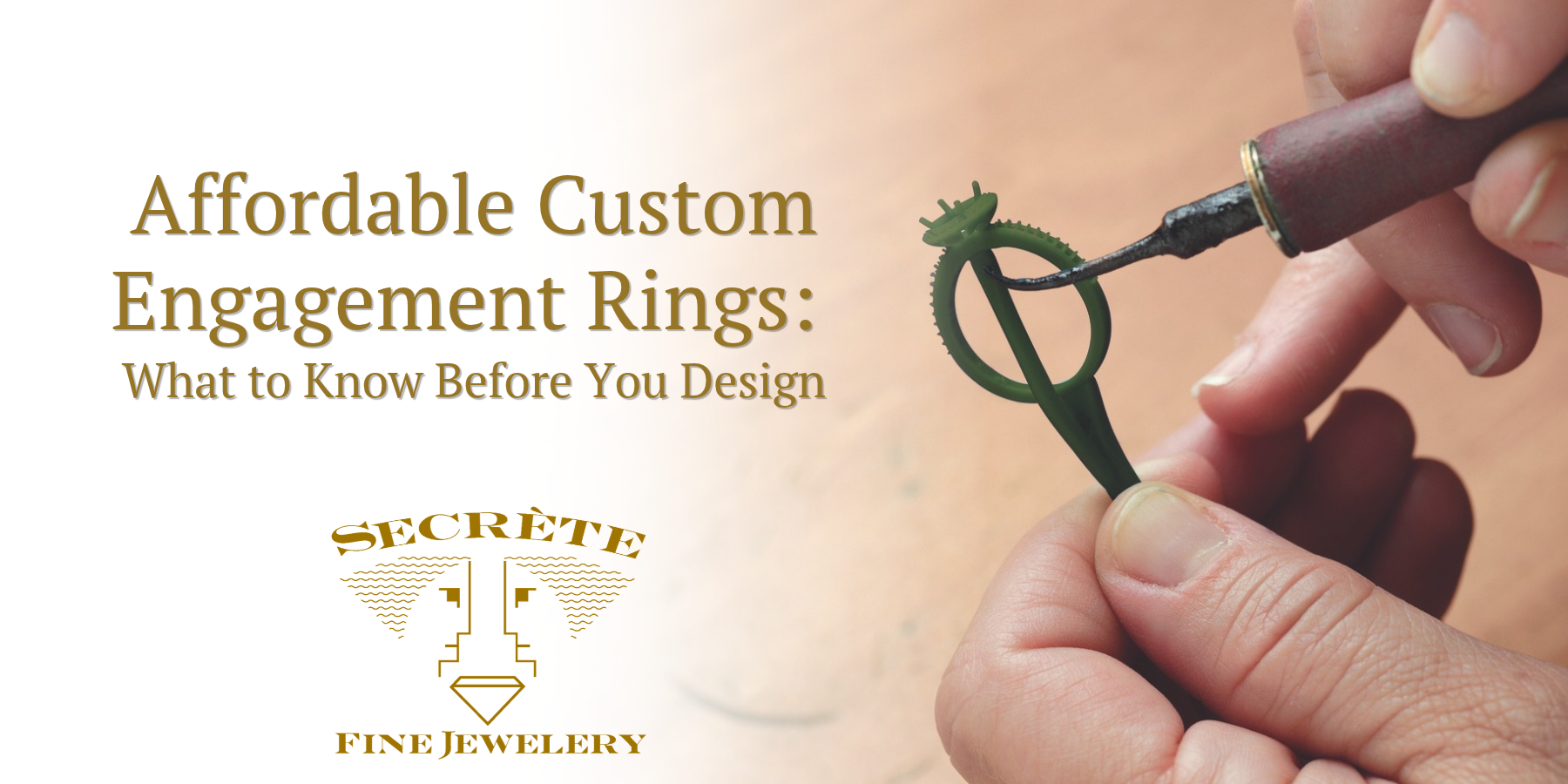
Creating a custom engagement ring takes time, particularly when the design involves unusual gemstones, intricate details, or multiple revisions. The process begins with discussing your ideas, choosing materials, and developing a design before the jeweler can begin creating the finished piece. Depending on the complexity of the ring, sourcing the right gemstone or preparing a detailed setting may require additional time. If you’re planning a proposal for a specific date, it’s important to share that information with your jeweler at the beginning of the process so you can establish a realistic schedule.
Starting early also gives you more flexibility with your budget because you won’t feel pressured to make decisions without considering your options. You may want to compare several diamonds, explore different gemstone shapes, or make adjustments to the setting after reviewing the initial design. Having enough time to consider these details allows you to make informed choices about the finished ring rather than rushing through decisions that affect its appearance and cost.
Design Your Custom Engagement Ring at Secrète Fine Jewelry
At Secrète Fine Jewelry, we specialize in helping couples create custom engagement rings that reflect their individual tastes, from traditional diamond solitaires to elaborate antique-inspired designs. We work directly with diamond laboratories and cutters to source unusual stones, including antique-cut lab-grown diamonds, and can help you explore natural diamonds, moissanite, sapphires, and other gemstones. Whether you’re working from a photograph of a vintage ring, combining details from several designs, or starting with an idea of your own, our jewelers can help you develop a design that fits your budget.
Creating an affordable custom engagement ring doesn’t mean settling for something you don’t love. It means choosing the materials and details that matter most to you and making informed decisions about where your money goes. If you’re ready to explore your options, contact Secrète Fine Jewelry to schedule a custom engagement ring consultation at our Washington, DC, or Bethesda, Maryland, location.