
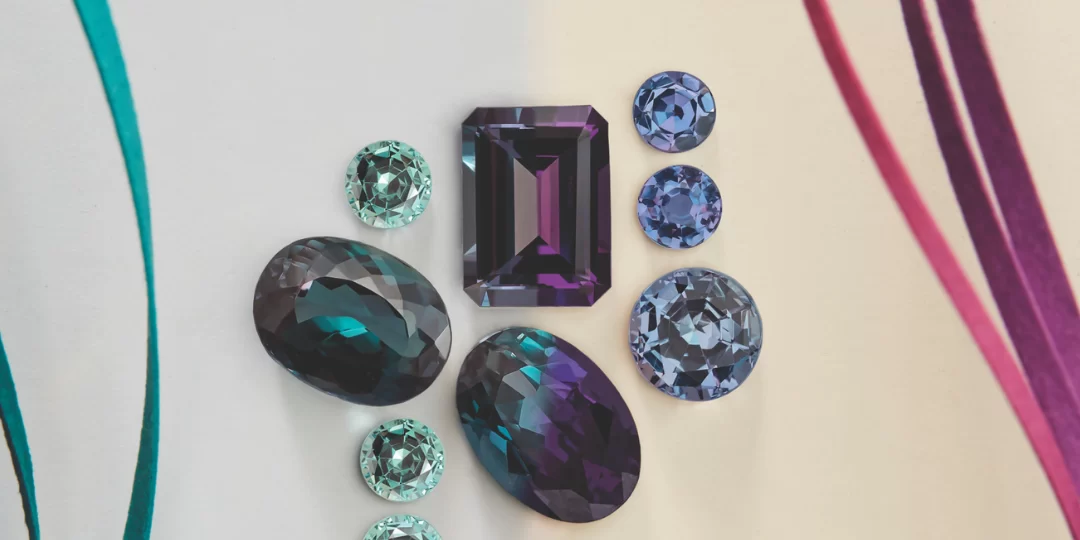
Alexandrite engagement rings are chosen for their rare color change, luminous beauty, and unmistakably personal character. An alexandrite offers your engagement ring rarity, beauty, history, and a remarkable color change that feels almost impossible at first glance. In daylight, fine alexandrite can appear green, blue green, or teal. Under warm indoor light, that same stone can shift toward raspberry, plum, purple, or red. Because of that transformation, alexandrite has a romance that few gemstones can match.

For couples drawn to unusual fine jewelry, alexandrite offers something more personal than a traditional diamond. It is not chosen because everyone recognizes it. It is chosen because the right person understands what makes it extraordinary. At Secrète Fine Jewelry, alexandrite is especially compelling for custom engagement rings, vintage inspired designs, and diamond accented settings. Whether you prefer a real alexandrite engagement ring or a lab grown alexandrite engagement ring, the stone brings rare character to the design.

What Is Alexandrite?
Alexandrite is the color-changing variety of chrysoberyl, a precious category of minerals that also includes the gemstone Cat’s Eye. Alexandrite was first discovered in Russia’s Ural Mountains in the 1830s and was named for the future Czar Alexander II. The gem became closely associated with imperial Russia, partly because its red and green color change echoed Russian military colors. This history still gives alexandrite a regal, old world feeling that suits engagement jewelry beautifully.
Today, alexandrite is found in places such as Brazil, Sri Lanka, East Africa, Madagascar, India, and Burma. Still, fine natural alexandrite remains extremely rare. GIA explains, “Production from Russian mines is very limited today, which means the intense, fine-colored gems they produced in quantity less than 200 years ago are much harder to come by. ”
Alexandrite is also durable enough for an engagement ring when it is properly chosen and set. It ranks 8.5 on the Mohs hardness scale, which places it just below sapphire and ruby but above many other colored gems in terms of how it resists scratches. That hardness makes an alexandrite stone engagement ring a practical choice for someone who wants color without choosing a fragile gem. Its beauty is unusual, but its durability is excellent.
Alexandrite’s color change is a rare optical phenomenon caused by the way chromium interacts with light inside chrysoberyl. The stone absorbs portions of the yellow spectrum, which allows different colors to dominate under different light sources. In daylight or fluorescent light, fine alexandrite usually appears green to blue green. Under incandescent or candlelight, it can shift to red, raspberry, plum, or purplish red. Some lower quality stones show a weaker change, moving from yellowish green to brownish red or brown. The most valuable alexandrites show a strong, vivid shift from green or blue green to red or purplish red, with good saturation in both lighting conditions.


Why Alexandrite Is a Beautiful Choice for Engagement Rings
Alexandrite is often described as the rarest birthstone, especially among people who love colored gems. It is one of June’s birthstones, but it feels far less common than pearl or moonstone. That rarity gives it immediate appeal for an engagement ring. A bride who chooses alexandrite is choosing something refined, personal, and difficult to duplicate.

The preciousness of alexandrite is also part of its appeal. It is hard to compare colored gems and diamonds directly because value depends on different qualities. However, a high quality alexandrite weighing over one carat can be worth more than diamonds of comparable quality and size. That value comes from scarcity, color change, saturation, size, and origin. Fine alexandrite is not simply beautiful. It is also a serious collector’s gemstone.

Compared with traditional engagement ring stones, alexandrite has a different significance. Diamond is loved for brilliance, symbolism, and durability. Sapphire offers rich color, royal associations, and excellent hardness. Emerald has a lush green beauty, but it needs more careful wear. Alexandrite, however, offers rarity, strong durability, historic romance, and a dramatic optical phenomenon. For that reason, it belongs among the best gems for engagement rings.
An alexandrite and diamond engagement ring can be especially striking. Diamonds add brightness and structure, while alexandrite brings depth and mystery. A diamond halo can make the center stone look larger and more luminous. Side diamonds can frame the color change without overwhelming it. This balance makes an alexandrite and diamond ring feel elegant rather than trendy.

Best Styles for Alexandrite Engagement Rings
Alexandrite works beautifully with white gold, platinum, rose gold, and yellow gold. White gold and platinum sharpen the stone’s cooler daylight tones. Rose gold supports its raspberry, plum, and purple side. Yellow gold can also be striking, especially when the design has a vintage or heirloom feeling. The metal choice should support both sides of the color change, not just one.
Because alexandrite is rare, cutters often shape the stone to preserve as much beautiful rough as possible. This means alexandrite is frequently available in ovals, pears, cushions, and mixed cuts. Round alexandrites exist, but they can be harder to source in fine quality. A pear shaped alexandrite engagement ring can feel graceful and elegant, while a cushion cut can look soft, antique, and romantic.
An alexandrite solitaire ring is a strong choice when the center stone has exceptional color change. The clean setting lets the gem speak for itself. However, many natural alexandrites are smaller than traditional diamond center stones. In those cases, halos, side stones, and detailed bands can add presence without making the ring feel heavy. A smaller center stone can still look important when the proportions are right.
A vintage alexandrite engagement ring is another beautiful direction. The stone’s Russian history, rarity, and shifting color all suit antique inspired details. Milgrain, engraving, tapered baguettes, and delicate pavé can create a ring with depth and refinement. For a coordinated look, an alexandrite engagement ring set can include a curved or contoured wedding band made to sit neatly against the engagement ring.
A custom alexandrite engagement ring is often the best path because the gem itself determines so much. The setting should be built around the stone’s shape, size, color, and light performance. At Secrète Fine Jewelry, a custom process allows the design to respect the alexandrite rather than forcing it into a standard mounting. That is especially important with a rare gemstone.
Lab Grown Alexandrites and Treated Alexandrites

Because fine natural alexandrite is rare, many buyers also consider a lab grown alexandrite engagement ring. This can be a beautiful option for someone who wants a larger center stone or stronger color at a more accessible price. However, the exact material matters. Not every stone sold as lab created alexandrite is the same thing.
Color-change sapphire, also known as alexandrite-like synthetic corundum, was created in laboratories using the flame-fusion method. This material became popular in the early 1900s as an affordable substitute for rare natural alexandrite. It can show an attractive color change, but it is not true alexandrite. It is synthetic corundum, which makes it related to sapphire instead of chrysoberyl.
Today, true lab grown alexandrite is synthetic chrysoberyl. That means it has essentially the same chemical identity as natural alexandrite, but it was grown in a laboratory. A lab created alexandrite engagement ring can look beautiful, especially when the goal is color, size, and durability. Still, it should always be clearly described as lab grown.
Treatment disclosure is also important. Natural alexandrite should be purchased with clear gemological information whenever possible. If heating or any other treatment is claimed, it should be documented and reflected in the price. A treated stone may offer a more affordable path to an attractive color change, but disclosure matters. With a gemstone this rare, documentation protects both beauty and value.
Famous Alexandrites
Alexandrite has attracted collectors for generations because exceptional stones are so difficult to find. The earliest Russian examples remain especially admired because they set the standard for fine color change. Russian royal associations also helped shape alexandrite’s reputation as a gem of ceremony, status, and rarity. That history still follows the stone today.

One famous example can be seen here in Washington, DC. The Whitney Alexandrite is part of the Smithsonian National Museum of Natural History collection. It weighs 17.08 carats and comes from Minas Gerais, Brazil. The stone changes from raspberry under incandescent light to teal under daylight, which makes it a remarkable public example of alexandrite’s beauty.

Alexandrite has also appeared in modern celebrity jewelry. Heidi Klum and Tom Kaulitz got engaged with a halo-set alexandrite stone centered between two baguette diamonds. That design shows how sophisticated alexandrite can look when paired with diamonds. –Marie Claire
Is an Alexandrite Engagement Ring Right for You?
An Alexandrite Engagement Ring is ideal for someone who wants a rare and meaningful alternative to a traditional diamond. It has the durability needed for fine jewelry, the history of a royal gemstone, and the visual magic of a true color change. It also feels personal because no two fine alexandrites look exactly alike.
For some couples, a real alexandrite engagement ring is the dream. For others, a lab grown alexandrite engagement ring offers the desired look at a more approachable price. Both can be beautiful when the stone is honestly represented and the design is thoughtfully made. The key is choosing the right gem, the right setting, and the right jeweler.
Secrète Fine Jewelry can help you compare natural, lab grown, diamond accented, and custom alexandrite options. Whether you love an alexandrite solitaire ring, an alexandrite diamond ring, or a vintage inspired design, the final piece should feel rare and personal. Alexandrite is not the obvious choice, and that is exactly why it is so memorable. Contact us today to start your custom design appointment.